
How to Choose the Right Promotional Products Supplier for Your Australian Business
Learn how to choose the best promotional products supplier in Australia with tips on quality, pricing, turnaround times, and product range.

Written by
Riley Monk
Custom Apparel
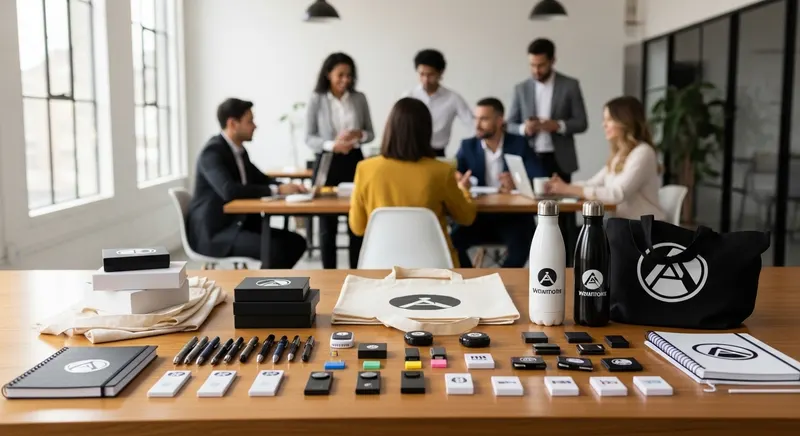
Finding the right promotional products supplier can make or break your next marketing campaign. Whether you’re a Sydney-based marketing manager preparing for a major trade show, a Melbourne sports club kitting out its members for the new season, or a Brisbane retailer sourcing branded merchandise for a product launch, the supplier you choose directly impacts your brand’s reputation, your budget, and your timeline. With so many options available across Australia, knowing what to look for — and what to watch out for — is essential before you commit to an order.
What Does a Promotional Products Supplier Actually Do?
Before diving into how to choose one, it’s worth understanding what a quality supplier actually offers. At its core, a promotional products supplier sources, decorates, and delivers branded merchandise on behalf of businesses, organisations, and clubs. But the best suppliers go well beyond simply putting a logo on a product.
A good supplier will work with you to understand your target audience, your event or campaign goals, and your brand guidelines. They’ll recommend suitable products from their range, advise on decoration methods, manage artwork and proofing, and coordinate production and delivery — often across multiple product categories in a single order.
For example, a Perth-based corporate client might need sublimation services for promotional products alongside embroidered polo shirts and laser-engraved drinkware — all sourced through a single supplier relationship. That kind of end-to-end capability is what separates a truly useful supplier from a basic online print shop.
Key Factors to Evaluate When Selecting a Promotional Products Supplier
Not all suppliers are created equal. Here’s what to assess before you place your first order.
Product Range and Depth
A strong supplier should carry a broad and deep product catalogue. This matters because your merchandise needs will change over time. You might need custom work shirts for your team in March, zip-up hoodies for a winter staff event in July, and unique corporate gifts for end-of-year client appreciation in December.
Working with a supplier that can handle all of these — rather than juggling multiple vendors — saves time, reduces admin, and often leads to better pricing through accumulated spend. Look for suppliers who cover:
- Custom apparel — polos, t-shirts, hi-vis workwear, work shirt polos, and outerwear
- Drinkware — branded stainless steel water bottles, glass water flasks, and keep cups
- Bags — tote bags, backpacks, zipper totes, and cooler bags
- Seasonal items — winter branded merchandise, personalised Christmas baubles, and summer accessories
- Eco-friendly products — upcycled fabric branded bags, bamboo desk accessories, and glass water bottles
Decoration Methods and Print Quality
The decoration method used on your merchandise significantly affects the final result. A good promotional products supplier will be transparent about which method suits each product type and will guide you accordingly.
Common decoration methods include:
- Screen printing — ideal for large runs of t-shirts and tote bags with bold, flat artwork
- Embroidery — best suited for polo shirts, caps, and workwear where durability and a premium finish are important
- Sublimation — excellent for full-colour, all-over prints on apparel and drinkware
- Laser engraving — perfect for metal and timber products like drinkware, pens, and awards
- Pad printing — commonly used for pens, USB drives, and small promotional items
- Heat transfer — flexible option for smaller runs or complex artwork
Ask prospective suppliers which methods they perform in-house versus which they outsource. In-house capability usually means faster turnaround, better quality control, and easier communication when issues arise.
Minimum Order Quantities
Minimum order quantities (MOQs) are one of the most practical considerations when selecting a supplier. MOQs vary considerably across product categories and suppliers. Some items — particularly those requiring screen printing setup — may require a minimum of 50 or 100 units. Others, like laser-engraved drinkware or embroidered caps, might be available from as few as 12 or 25 units.
This matters enormously depending on your situation. A Gold Coast sports club ordering gym towels for 30 members needs a supplier flexible enough to accommodate that volume without requiring a 500-unit commitment. Similarly, a small Adelaide business sourcing varsity jackets for a staff reward programme won’t want to be locked into an oversized minimum.
Always ask about MOQs upfront — and find out whether samples are available before committing to a full production run.
Turnaround Times and Rush Order Capability
In the promotional products industry, timing is everything. If your supplier can’t deliver before your event date, the best product in the world is worthless to you.
Standard turnaround times for most branded merchandise range from five to fifteen business days after artwork approval, depending on the product and decoration method. Rush orders are often available — sometimes with an additional fee — but not every supplier can accommodate them reliably.
When evaluating a supplier, ask:
- What is the standard production lead time for your product category?
- Is rush production available, and what are the cut-off points?
- What is the dispatch and freight timeline to your city or regional area?
If you’re based in Darwin or Hobart — cities where freight times can add extra days compared to Sydney or Melbourne — it’s worth factoring in an additional buffer when planning your order timeline.
Working With a Promotional Products Supplier: Getting the Best Outcome
Choosing the right supplier is only half the equation. How you work with them matters just as much.
Prepare Your Artwork Correctly
Artwork requirements are one of the most common sources of delay and frustration in branded merchandise projects. Most suppliers require vector files (typically AI or EPS formats) with fonts outlined and colours referenced in Pantone (PMS) values. Providing print-ready artwork from the start significantly speeds up the proofing process.
If your brand files aren’t in the right format, a good supplier will often have an in-house artwork team that can convert or recreate your files — though this may attract a small fee.
Understand Setup Fees and Pricing Tiers
Promotional products are priced on a tiered basis — the more units you order, the lower the cost per item. Setup fees (also called plate fees or screen fees) are often charged separately and cover the cost of preparing the decoration machinery for your artwork. These fees are typically a one-off cost and may be waived for repeat orders using the same artwork.
Always request a full, itemised quote that includes:
- Unit cost at your required quantity
- Setup or plate fees per colour or decoration position
- GST
- Freight to your delivery address
Ask About Samples
If you’re placing a large order or sourcing a product you haven’t used before, requesting a sample is worth the investment. A pre-production sample (sometimes called a PP sample) shows you exactly how your logo will look on the finished product before the full run is produced. Some suppliers provide blank samples free of charge, while branded samples may attract a fee — but it’s almost always money well spent.
Red Flags to Watch Out For
Even with careful research, some suppliers fall short. Here are a few warning signs to watch for:
- No physical address or ABN listed — a legitimate Australian supplier should be easy to verify
- No artwork proofing process — rushing straight to production without a proof approval step is a recipe for errors
- Unrealistic turnaround promises — if a supplier promises branded merchandise in two days with no caveats, proceed with caution
- Poor communication — slow or vague responses during the quoting phase often indicate how they’ll behave when issues arise during production
Regional Suppliers and Local Expertise
There’s real value in working with a supplier who understands your region. A Townsville business, for example, has specific considerations around freight, climate, and the types of events and industries common to North Queensland — something a supplier familiar with custom merchandise for that region will naturally understand.
Similarly, if you’re sourcing niche items like toiletries bags for a wellness brand or branded shopping bags for a retail promotion, a supplier who has handled similar projects in your industry will bring useful experience to the table.
Conclusion: Choosing a Promotional Products Supplier That Works for You
Selecting the right promotional products supplier is a strategic decision that deserves proper consideration. The right partner won’t just print your logo on a product — they’ll help you choose merchandise that resonates with your audience, meets your deadline, fits your budget, and reflects your brand with confidence.
Here are the key takeaways to guide your decision:
- Assess the product range — choose a supplier with broad capabilities so you can consolidate your merchandise needs under one roof
- Understand decoration methods — match the print technique to the product and your artwork requirements
- Clarify MOQs and pricing upfront — including setup fees, tiered pricing, and freight to your location
- Request a sample for large or unfamiliar orders to avoid costly mistakes
- Prioritise communication and transparency — a supplier who responds promptly, provides clear proofs, and is upfront about timelines will save you stress in the long run
The right promotional products supplier becomes a genuine asset to your marketing efforts — one you’ll return to season after season, campaign after campaign.