
Bronze Medals for Sports Clubs and Events: A Complete Ordering Guide
Everything Australian sports clubs and event organisers need to know about ordering bronze medals, from materials to custom engraving.

Written by
Diana Ruiz
Awards & Recognition
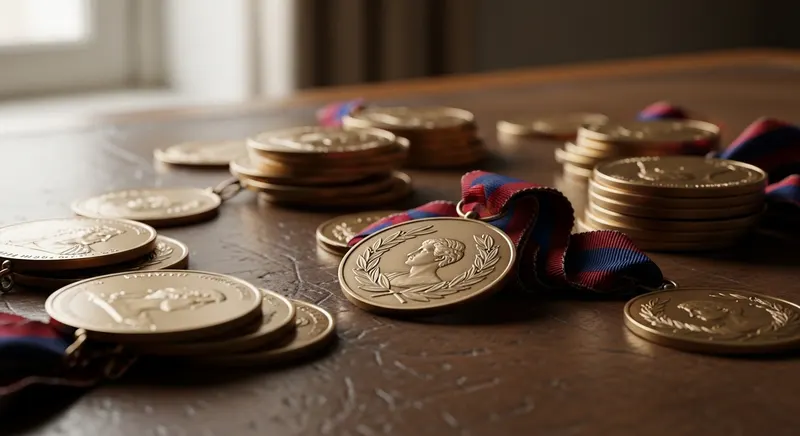
There’s something undeniably powerful about placing a medal around someone’s neck. Whether it’s a ten-year-old sprinting across a finish line at a school athletics carnival in Adelaide or a seasoned netballer claiming third place at a state-level tournament in Brisbane, bronze medals carry real emotional weight. They represent effort, perseverance, and the spirit of healthy competition — and for the organisations handing them out, they’re also a meaningful extension of their brand and values. If you’re a sports club administrator, event coordinator, or marketing manager tasked with sourcing awards for an upcoming competition, this guide will walk you through everything you need to know about ordering bronze medals in Australia.
Why Bronze Medals Still Matter in Australian Sport and Events
In an age of digital certificates and online leaderboards, physical awards remain irreplaceable. A bronze medal is a tangible keepsake — something that sits on a shelf, gets photographed, and gets talked about for years. For Australian sporting clubs, community events, school carnivals, and corporate challenge days, medals are one of the most cost-effective recognition tools available.
Bronze medals specifically carry a sense of legitimacy and tradition. They signal that an event is well-organised, that participation is valued, and that third place is still worth celebrating. For clubs and organisations operating on tight budgets, bronze is also typically the most affordable of the classic podium metals, which means you can stretch your recognition budget further without compromising on the quality of the experience.
Beyond sport, bronze medals are increasingly being used in:
- Corporate team-building events — rewarding staff performance challenges or internal competitions
- School and TAFE academic competitions — science fairs, debating tournaments, and STEM challenges
- Community fun runs and charity events — particularly popular across Melbourne, Sydney, and the Gold Coast
- Trivia nights and corporate games days — adding a professional, memorable touch to social events
The Difference Between Zinc Alloy, Iron, and Solid Bronze Medals
Most medals sold as “bronze” in the promotional products industry are not made from pure bronze. Understanding the materials available will help you make a smarter purchasing decision.
Zinc alloy die-cast medals are the most common option. They’re lightweight, highly detailed in their design, and easy to plate with a bronze finish. These are ideal for high-volume orders — think school sports days or large community tournaments where you might need 500 medals or more.
Iron stamped medals are heavier and more durable, giving a premium feel at a moderate price point. They’re a popular choice for regional sporting associations and club-level championships.
Solid bronze medals are reserved for prestige events and are considerably more expensive. These are rarely needed for most Australian clubs and events but may be worth considering for long-standing annual championships or Hall of Fame–style recognition programmes.
For most applications, a zinc alloy or iron medal with a high-quality bronze electroplating finish will look and feel excellent — and your recipients won’t know or care about the base material when they’re wearing their medal on the podium.
Customisation Options for Bronze Medals
One of the most important decisions you’ll make when ordering bronze medals is how they’ll be personalised. Generic stock medals are available, but custom medals are far more impactful and often only marginally more expensive when ordered in volume.
Die-Cast Custom Shape Medals
Die-cast medals allow you to create a completely custom shape — your club logo, a state outline, a sport-specific silhouette (football, swimming, cycling), or an event emblem. The tooling (die) is created once and then used for the entire print run. Die-cast medals typically have higher upfront costs due to the mould creation, so they’re best suited for established clubs or annual events with recurring medal needs.
Spinner and Insert Medals
Insert medals feature a central disc — often printed in full colour using sublimation — set within a metal frame. This is an incredibly popular option for Australian sporting clubs because you can include logos, event names, year, and even full-colour images without the constraints of traditional metal engraving. If you’re interested in how sublimation works for promotional products, our guide to sublimation services for promotional products in Perth covers the process in excellent detail.
Engraving and Ribbon Options
Engraving individual names or event details onto the back of medals adds a deeply personal touch. Laser engraving is the most precise method and works beautifully on metal surfaces. Ribbons — typically 10–15mm wide, in your club’s colours or event branding — can be custom woven or printed, completing the overall presentation.
Custom ribbon colours are particularly appreciated by clubs with strong visual identities. A Perth football club with a navy and gold colour scheme, for instance, can have their ribbons woven to match their jerseys, creating a cohesive and professional look that photographs brilliantly for social media.
Understanding MOQs, Lead Times, and Budgets
Minimum Order Quantities
For stock bronze medals with standard ribbons, MOQs can be as low as 10–25 units. For custom die-cast medals with your own shape and design, expect MOQs of 100–300 units depending on the supplier. Insert medals with sublimated centres tend to have more flexible MOQs, often starting at 50 units.
Turnaround Times
Standard stock medals: 5–10 business days Custom insert medals: 2–4 weeks Die-cast custom medals: 6–12 weeks (due to mould creation and manufacturing)
Always build buffer time into your planning. If your event is in October, don’t start the ordering process in late September. Delays in artwork approval, proofing, or logistics can be costly — especially if your event has a fixed date.
Budget Considerations
Bronze medals typically sit in a lower price tier than silver or gold, which makes them the most accessible option for budget-conscious clubs and event organisers. As a rough guide:
- Stock bronze medals: $3–$8 per unit
- Custom insert medals: $6–$15 per unit
- Custom die-cast medals: $10–$30+ per unit (plus tooling fees)
Volume significantly reduces per-unit cost. An order of 500 medals will cost considerably less per piece than an order of 50. If you’re also sourcing other recognition items — perhaps unique corporate gifts for sponsors, varsity jackets for team captains, or branded apparel like custom work shirts for officials — consolidating your order with a single supplier can sometimes unlock better pricing across the board.
Artwork Requirements and Proof Approval
Getting your artwork right is critical. Most suppliers will require vector files (AI, EPS, or PDF format) for any engraving or custom shaping work. For sublimated inserts, high-resolution raster files (300 DPI minimum) in JPEG or PNG format are typically acceptable.
Always request a digital proof before approving production. This is your last chance to catch spelling errors, logo proportions, or colour issues before hundreds of medals are manufactured. PMS colour matching is available through most premium suppliers and is worth requesting if brand consistency is essential to your organisation.
Pairing Bronze Medals with Other Awards and Merchandise
A well-rounded awards programme rarely relies on medals alone. Many Australian sporting clubs and event organisers pair their bronze, silver, and gold medals with complementary items to create a richer recognition experience.
Popular pairings include:
- Branded drinkware — stainless steel water bottles or glass water flasks for age-group winners
- Tote bags — tote bags with zip closures work well as event participant packs
- Branded towels — particularly relevant for swimming carnivals or trivia day giveaways; see our thoughts on gym towels for branded merchandise
- Seasonal merchandise — for winter tournaments across Canberra, Hobart, or regional Victoria, pairing medals with winter branded merchandise like zip-up hoodies creates a memorable participant experience
- Eco-friendly desk items — ideal for corporate events; sustainable bamboo desk accessories make excellent accompaniments for white-collar challenges or internal staff awards
If your event includes a dinner or presentation night, branded items like personalised Christmas baubles can double as keepsake place settings during end-of-year functions. For community events in regional Queensland, our guide to custom merchandise for North Queensland is also worth reading if you’re sourcing locally.
Common Mistakes to Avoid When Ordering Bronze Medals
Leaving it too late. Custom medals take time. If you need die-cast medals with a custom shape, you may need to allow 10–12 weeks from artwork approval to delivery.
Ignoring the ribbon. A beautifully made medal presented on a flimsy, generic white ribbon looks unfinished. Invest in custom or matched ribbons.
Ordering the exact number you need. Always order 5–10% more than your anticipated quantity. Equipment failures, last-minute participant entries, and breakages can leave you short on the day.
Skipping the sample. For large orders or prestigious events, request a pre-production sample before approving the full run. What looks great on screen doesn’t always translate perfectly to physical metal.
Not considering display. If medals will be presented at a ceremony, think about how they’ll be displayed beforehand. Velvet presentation boxes or custom display boards add a layer of professionalism that elevates the entire experience.
Conclusion: Ordering Bronze Medals the Right Way
Bronze medals might sit at the bottom of the podium, but they deserve to be treated with the same care and consideration as gold. Whether you’re coordinating a Darwin primary school sports day, running a charity fun run along the Surf Coast, or managing a large-scale corporate games day in Sydney, getting your medal order right reflects on your organisation’s professionalism and your respect for your participants.
Here are the key takeaways to carry into your next medal order:
- Plan early — custom bronze medals, especially die-cast options, require significant lead time; 8–12 weeks is a safe buffer for complex orders
- Choose the right material and customisation method for your budget and volume — insert medals offer great flexibility, while die-cast options suit recurring annual events
- Always request a proof before approving production, and check every detail including spelling, logos, and ribbon colours
- Pair medals with complementary merchandise to create a richer, more memorable recognition experience for participants
- Order extras — running short of medals on presentation day is a situation no event organiser wants to face
With the right preparation and a clear brief, your bronze medals will be something recipients are genuinely proud to take home — and something your organisation will be equally proud to hand out.