
Looking for Printing Near Me? Here's What Australian Businesses Should Know
Searching for printing near me? Discover how to find the best local printing for custom branded merchandise across Australia.

Written by
Bianca Moretti
Buying Guides & Tips
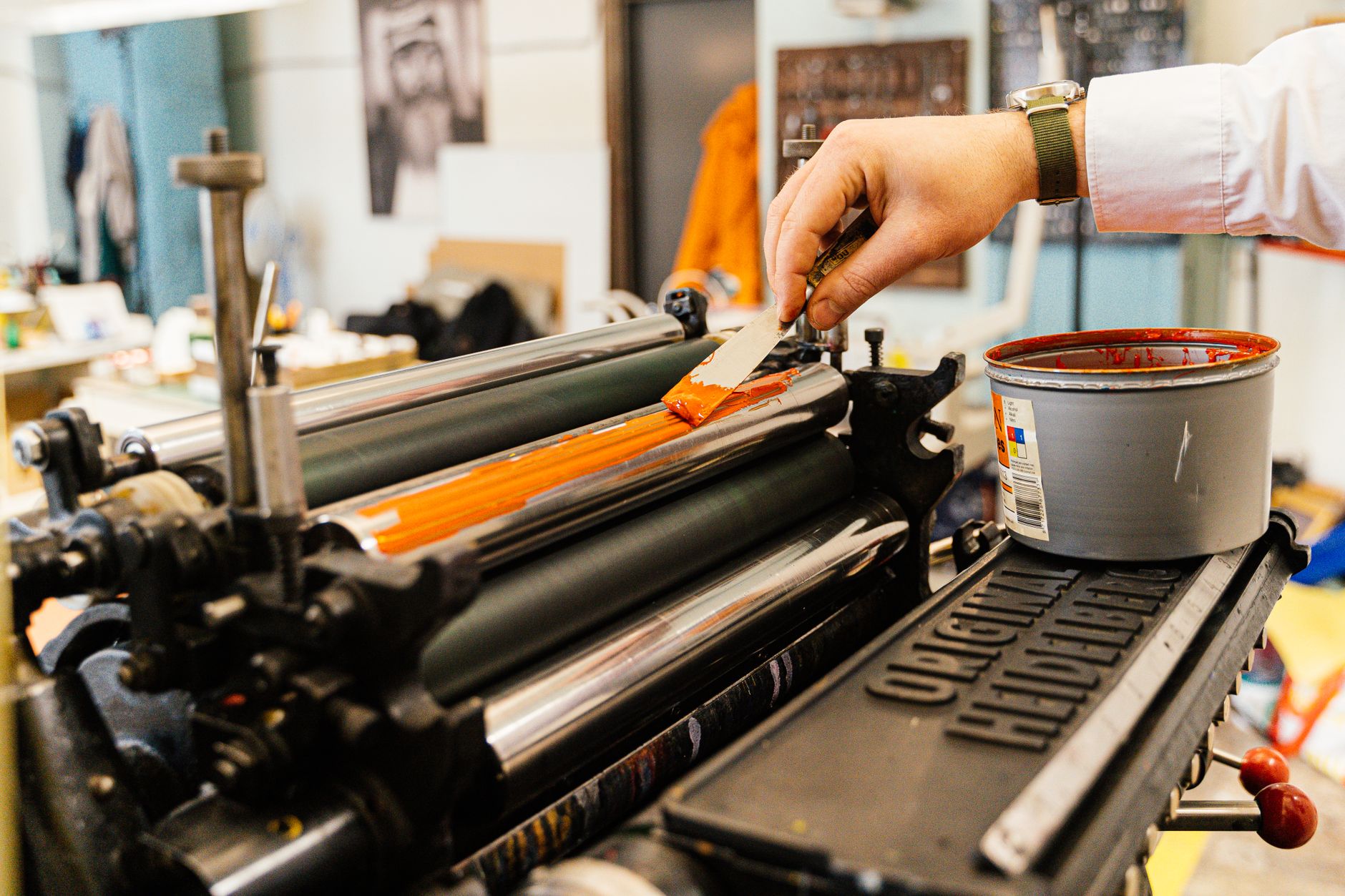
Searching for “printing near me” is one of the most common starting points for Australian businesses, marketing teams, and sports clubs when they need custom branded merchandise — but it rarely tells the full story. Local printing has genuine advantages, but in 2026, the landscape of how and where you source quality custom printing has changed dramatically. Understanding your options, knowing what questions to ask, and matching your printing method to your product are the real skills that separate a great branded merchandise outcome from a frustrating, expensive mistake. Whether you’re a Sydney marketing team ordering corporate polos ahead of a product launch, a Melbourne sports club gearing up for winter, or a Brisbane retailer after custom tote bags, this guide will walk you through everything you need to know before you commit.
Why People Search for Printing Near Me
It makes complete sense. When you type “printing near me” into Google, you’re probably driven by one or more of the following needs: you want something quickly, you want to see samples in person, you want to discuss your project face-to-face, or you simply feel more comfortable dealing with a local supplier. These are all completely valid reasons.
Local printing suppliers can be fantastic for fast turnarounds on short-run orders, particularly for signage, flyers, and basic garment decoration. If you’re in Adelaide needing a banner printed for next weekend’s trade show, a local print shop might genuinely be your best option.
However, “local” doesn’t always mean “best” — especially when it comes to branded merchandise and promotional products. Here’s the challenge: most local print shops are set up for commercial print (brochures, banners, business cards) rather than the specialised decoration methods used for promotional products like embroidery, sublimation, pad printing, or laser engraving. Confusing these two categories is one of the most common mistakes organisations make when sourcing custom merch.
Understanding the Different Types of Printing for Branded Merchandise
Before you start calling around local suppliers, it’s worth understanding that “printing” in the branded merchandise world covers a wide range of decoration techniques — and not every supplier offers all of them.
Screen Printing
Screen printing is the go-to method for high-volume custom apparel like t-shirts, polos, and hoodies. It delivers vibrant, durable results and is highly cost-effective at larger quantities — typically 50 pieces or more. If you’re ordering custom work shirts or polo shirts for your team, screen printing is often the first decoration method to consider. Setup fees apply per colour, so designs with fewer colours become more economical. For a deeper dive into your apparel options, check out our overview of shirt and printing methods to understand which technique suits your design best.
Embroidery
Embroidery involves stitching your design directly into fabric and is the premium choice for corporate apparel, caps, and workwear. It’s ideal for logos, particularly on zip-up hoodies, varsity jackets, and polos where a professional, textured finish elevates the brand presentation. Embroidery is best suited for simpler, bolder designs — highly detailed artwork with fine lines or gradients doesn’t translate well into stitching.
Sublimation
Sublimation printing uses heat and pressure to fuse dye directly into the material, producing full-colour, photographic-quality results. It’s widely used for custom drinkware, sports apparel, and promotional products. If you’re in Western Australia, it’s worth exploring sublimation services for promotional products in Perth as a starting point for understanding what’s available in your region. One limitation: sublimation only works effectively on white or very light-coloured polyester-based materials, so it’s not a one-size-fits-all solution.
Laser Engraving and Pad Printing
For hard goods like stainless steel water bottles, glass water bottles, glass water flasks, and corporate gifts, laser engraving and pad printing are the standard methods. Laser engraving etches your design into the surface permanently — it’s clean, professional, and incredibly durable. Pad printing uses a silicone pad to transfer ink onto curved or irregular surfaces, making it perfect for items like pens, USB drives, and small promotional goods.
Local Printing vs Online Suppliers: What’s the Real Difference?
This is where many organisations get tripped up. When you search for printing near me, you’re likely seeing a mix of local print shops and local branches of larger fulfilment networks — and the quality, pricing, and product range can vary enormously.
Local print shops are typically strong for:
- Fast turnaround on standard commercial print jobs
- Small quantities with no minimum order quantity (MOQ) pressure
- In-person conversations and physical sample review
Specialist promotional product suppliers (which may operate nationally but service your region) tend to offer:
- A broader range of decoration methods and product categories
- Competitive bulk pricing tiers
- Experience with artwork setup, PMS colour matching, and branding consistency
- Products specifically designed to carry branding, not just commodities adapted for print
For example, a Gold Coast real estate agency ordering branded tote bags with zip closures or beach tote bags for a client gift campaign will almost certainly get a better result — and better pricing — from a promotional products specialist than from a generic local print shop. The products are purpose-built for branding, and the decoration is applied with the right method from the start.
Key Questions to Ask Before You Place an Order
Whether you’re going local or sourcing online, these questions should be non-negotiable before you commit your budget:
1. What decoration methods do you offer, and which is right for my product? Don’t assume a supplier who prints t-shirts also handles drinkware, bags, or tech accessories competently. Ask directly.
2. What’s your minimum order quantity? Some suppliers require 50 or 100 units as a minimum. Others can accommodate 12 or 24. Knowing this upfront saves time and budget.
3. What are your turnaround times, and do you offer rush orders? Standard turnaround for custom branded merchandise is typically 10–15 business days after proof approval. Rush services often attract a premium.
4. Can I see a digital proof before production? Always, always request a proof. This is your opportunity to check placement, size, colour, and spelling before anything is printed.
5. Do you offer samples? For larger orders or new product categories — like unique corporate gifts or bamboo desk accessories — a physical sample before full production is invaluable.
Matching Your Merchandise to Your Purpose
One of the most important things any Australian organisation can do is think beyond the print itself and consider whether the product and the decoration method actually suit the use case.
A Hobart charity organising a fundraiser, for instance, might think about upcycled fabric branded bags rather than standard promotional bags — aligning their merchandise with their values while still achieving strong brand visibility. A Darwin council might look at branded merchandise for North Queensland events if they’re operating across regional areas.
Seasonal considerations also matter enormously. Ordering custom merch for winter activations means thinking about warmth-focused products — our guide to winter branded merchandise covers exactly this territory if you’re planning a cold-weather campaign. And for end-of-year gifting, personalised Christmas baubles and seasonal items deserve attention well in advance.
Think about where the product will live. Branded toiletries bags make excellent corporate travel gifts that stay with the recipient. A branded silicone spatula makes a quirky, memorable gift for food-focused brands or hospitality events. These choices matter just as much as the printing method itself.
Artwork Preparation: Set Yourself Up for Success
One of the most common causes of delay and disappointment in branded merchandise projects is poor artwork preparation. Most professional suppliers require vector files — typically an .ai (Adobe Illustrator) or .eps file — for screen printing, embroidery digitising, and most decoration methods.
Here are the key artwork basics to have ready before you approach any supplier:
- Vector format for logos and text-based designs (not a JPEG or PNG from a website)
- Pantone (PMS) colour references if colour accuracy is critical to your brand
- A clear brief covering product type, decoration location, size, and quantity
- Brand guidelines if your organisation has them, so the supplier understands font, spacing, and colour rules
Getting this right before you make contact — whether with a local printer or an online supplier — will speed up the process considerably and reduce the risk of errors.
Conclusion: What to Remember When Searching for Printing Near Me
Finding the right printing supplier for your branded merchandise isn’t just about geography — it’s about matching expertise, capability, and product range to your specific need. Here are the key takeaways to carry forward:
- Local isn’t always best. A specialist promotional products supplier may offer far better quality, range, and pricing than a generic local print shop, even if they’re not around the corner.
- Know your decoration methods. Screen printing, embroidery, sublimation, laser engraving, and pad printing all serve different purposes — choosing the wrong method leads to disappointing results.
- Ask the right questions upfront. MOQs, turnaround times, proof processes, and sample availability should all be clarified before you commit.
- Prepare your artwork properly. Vector files and PMS colour references are non-negotiable for quality outcomes across most branded merchandise.
- Think beyond the print. The product itself, its purpose, and how it aligns with your brand values are just as important as how the logo goes on.
Whether you’re a marketing team in Melbourne, a sports club in Cairns, or a small business in Canberra just starting to explore branded merchandise, the most important thing you can do is take a little time to understand your options before placing that first order. The right supplier — local or otherwise — will make all the difference.